|
|
|
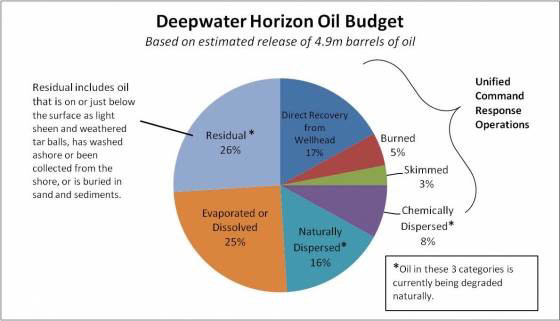
"Summits," symptoms and what's wrong at NOAA FishNet USA September 3, 2010 Last month the National Oceanic and Atmospheric Administration had its much ballyhooed and somewhat pretentiously titled Law Enforcement Summit. Looking for the most part like any other day out of the office for a hundred plus fisheries-dependent bureaucrats, academics and ENGO hangers-on, a handful of respected commercial and recreational fishing industry members and representatives were invited and attended. While I wasn’t and didn’t - I’m assuming that my invitation got lost in the mail - I did watch all that was worth watching, and a lot that wasn’t, via the webcast. I could go on and on about what I observed, what I gleaned from discussions with a number of the participants, and what I’ve read about it afterwards. Rather than doing that, however, I’m going to sum it all up with a quote from NOAA head Jane Lubchenco and then with her actions regarding an issue that is near the top of the interest list of a large proportion of fishing industry members on the East coast - the selective enforcement of fishing regulations by NOAA law enforcement that so harshly penalized fishermen and on-shore businesses. In her introductory remarks to the attendees, Ms. Lubchenco stated that one of her four expectations for the Summit was the formulation of "approaches for establishing consistency and transparency that contribute to public confidence in our enforcement program.” But at a meeting held just the week prior to these remarks by Ms. Lubchenco, Congressmen Barney Frank and John Tierney, whose districts include two of the largest fishing ports in the country, met with her to discuss, among other fisheries issues, the employment status of Dale Jones, the former head of NOAA law enforcement who left under a cloud following a document shredding incident coincident with an investigation of his office by the Inspector General of the Department of Commerce. In an article in the Gloucester Daily Times (Ousted fish cop still on NOAA payroll, 08/05/10), reporter Patrick Anderson wrote of this meeting “‘the result was very unsatisfactory,’ Frank said of Lubchenco's response to his long-standing push for NOAA to address past law enforcement abuses against fishermen, as well as provide relief from lowered catch limits for choke stocks under sector fisheries management. Tierney and Frank ‘were extremely frustrated with how NOAA is handling these critical issues,’ a spokeswoman for Tierney told the Times in an e-mail Thursday. When NOAA, citing legal concerns, refused to discuss Jones' status, Tierney threatened to subpoena the information, according to accounts of the meeting. Faced with the possibility of having to discuss Jones' employment at congressional hearings, NOAA confirmed to Frank and Tierney this week that Jones was still on the payroll.” His annual salary is reportedly $150,000 (http://www.gloucestertimes.com/local/x2064741162/Ousted-fish-cop-still-on-NOAA-payroll). In spite of her subsequent remarks at the Enforcement Summit, Ms. Lubchenco’s stance at this meeting says about all that needs to be said about her commitment to transparency. She’ll evidently minimally embrace it if it’s convenient and the alternative is a Congressional subpoena. I suspect it also says all that needs to be said about her commitment to doing anything else that might infringe on her plans for NOAA, NMFS and our domestic fisheries and fishermen, regardless of what anybody who fishes or cares about fishing might think. Following Ms. Lubchenco’s meeting with Franks and Tierney, her highly promoted Enforcement “Summit” and all of her assurances of reform, in Ex-NOAA chief's touting of Africa conference termed 'oversight' in the August 12 Gloucester Daily Times, Richard Gaines reported that an official NOAA letter went out “promoting a ‘global fisheries enforcement training workshop’ in Mozambique next month — purportedly to be led by the discredited U.S. federal fisheries police chief who's now on paid leave after revelations of excessive enforcement against American fishermen” NOAA claimed that the letter being sent was an “oversight” (http://www.gloucestertimes.com/local/x751321558/Ex-NOAA-chiefs-touting-of-Africa-conference-termed-oversight). Does any part of this pathetically sordid enforcement episode, from when it came to light (only after demands made by influential Members of Congress; not, as Ms. Lubchenco has insisted, at her urging) through the Inspector General’s initial investigation and the Enforcement Summit, to the fact that Dale Jones is still on the NOAA payroll and is still appearing to be in charge of NOAA enforcement, indicate anything other than the contempt with which Ms. Lubchenco and the people she’s brought to NOAA from the ENGO world holds fishermen (and Congress) and how little she and they are actually concerned about anything other than remaking our recreational and commercial fisheries the way they have decided they should be? When it comes to managing fisheries NOAA and NMFS are now being run by people, Ms. Lubchenco and her ex-ENGO claque, who seem to be far more concerned with the welfare of the fish in our waters than they are with the welfare of the fishermen who pursue those fish, the businesses that depend on their fishing, or the communities that have developed around them. Unfortunately, to a significant portion of the populace that’s an acceptable attitude. That includes those folks who see any human interference with nature as inherently evil (unless it’s interference that allows them to maintain and enjoy their own lifestyle) and those who have bought into the fantasy supported by ENGOs that “when the fish come back all of those fishermen… oops, sorry, fishers will be better off than they’ve ever been before.” But is that what’s really driving Ms. Lubchenco and her leadership corps at NOAA/NMFS? Let’s again consider the BP oil debacle in the Gulf. We’ve already examined her failure to follow through on her stated concerns regarding offshore drilling that she transmitted to the Minerals Management Service half a year prior to the BP disaster, her puzzling and extended denial that there were huge subsurface oil and dispersant plumes associated with the BP oil well blowout, and her performance - or lack thereof - in marshaling NOAA and other research forces in a coordinated and transparent effort to measure the damages to the Gulf ecosystems (see previous FishNet issues on at http://www.fishnet-usa.com/NOAA_Inaction.htm and http://www.fishnet-usa.com/FishAndOil.htm). Can any of these be considered as anything other than attempts to minimize the apparent severity of the disaster? But even now, when we are starting to realize the true extent of the spill and the obvious and immediate damage it has caused and are starting to consider the long-term impacts of the huge subsurface plumes of oil and dispersant that Ms. Lubchenco so strenuously and so publicly doubted for as long as she convincingly could, she still seems to be fully engaged in attempting to minimize the biological significance of what’s been done to the Gulf while she’s been in charge. At a press briefing on August 4 to announce that the gushing well was being brought under control (apparently an ongoing process, because we still aren’t at the permanent fix stage almost a month later), in answer to a question concerning the concentration of oil and associated dispersants in the critters in the Gulf of Mexico, Ms. Lubchenco answered “there is likely to be some dispersed oil that affects various creatures in the ocean and that’s part of the long-term studies that we need to do to see what the impact that’s going to have on those food webs. Now let’s say for example that a fish is eating some of these smaller creatures that had oil in them. That fish will degrade that oil and process it naturally and so it doesn’t bio-accumulate so it’s not a situation where we need to be concerned about that. Over time it will be broken down. The question is what is the impact in the meantime.” (80 minutes and 30 seconds into the briefing at http://www.whitehouse.gov/photos-and-video/video/press-briefing-20100804). Even though I’m not a scientist of Ms. Lubchenco’s world-class stature, there was something about her convoluted statement that I found troubling, so I thought I had better reaffirm my understanding of what bioaccumulation actually is. The U.S. Geological Survey’s concise definition is that it is “the biological sequestering of a substance at a higher concentration than that at which it occurs in the surrounding environment or medium.” An August 10 AP article observed “weeks ago, before engineers pumped in mud and cement to plug the gusher, scientists began finding specks of oil in crab larvae plucked from waters across the Gulf coast” (Blue crabs provide evidence of oil tainting Gulf food web). A photomicrograph of a blue crab larva accompanying the article is captioned “Small oil droplets are visible trapped inside the shell of an immature blue crab collected near Grand Isle by researchers from the University of Southern Mississippi and Tulane University.” So we have early life stages of blue crabs (Callinectes sapidus) that have concentrated oil from the BP well within their bodies (http://www.nola.com/news/gulf-oil-spill/index.ssf/2010/08/blue_crabs_provide_evidence_oi.html). The crab larvae are clearly concentrating BP oil and dispersants. Because of the massive oil release into the Gulf, what else is - or maybe the easier question would be what isn’t? According to Florida Institute of Oceanography Marine Geochemist David Hollander “the idea that this (The BP spill and the associated sub-surface plumes) could have an impact on the food web and on the biological system is certainly a reality. This is not addressing the question of turtles or of sharks or of birds, which are at the top of the food web, but rather the organisms that are at the base of the food web. The smaller organisms seem to be affected more quickly. So things like fish larvae, which could see small droplets, could consume them, and that's 100 percent oil. Fish eggs - if they're in that environment - they may not be consuming it, but it's like paint in the air. You breathe it at low concentrations for a long enough time, you're still going to have that response.” (Oil Found Deep in Gulf Is Toxic to Tiny Marine Life, Radio Station WUSF http://www.wusf.usf.edu/news/2010/08/17/oil_found_deep_in_gulf_is_toxic_to_tiny_marine_life). It seems that if these well-lubed crab larvae and other tiny organisms are eaten by organisms farther up the food chain, those organisms will be concentrating that oil even more heavily than it has already been concentrated by the crab larvae. Some of those organisms are going to be fish. And as we all know, even those of us not trained in coastal ecology, big fish eat little fish. I doubt that a bigger fish is going to make sure that a smaller fish is done degrading the oil from the crab larvae - or anything else that’s spent any time at all in those oil/dispersant plumes that Ms. Lunchenco had such a hard time accepting - before it eats it. And on and on and on. Yet in Ms. Lubchenco’s estimation “it’s not a situation where we need to be concerned.” Just as we didn’t need to be concerned about subsurface oil plumes (http://www.huffingtonpost.com/2010/06/02/noaa-director-toes-bp-lin_n_598461.html)? Or a blowout that was only gushing what she claimed was 5,000 barrels of oil into the Gulf every day (http://jetlib.com/news/tag/dr-lubchenco/)? At the same press briefing Ms. Lubchenco, in talking about the Deepwater Horizon Oil Budget, “thought that it was important to point out” that of the estimated 4.9 million barrels released into the Gulf of Mexico from the BP well “at least 50% of the oil that was released is now completely gone from the system.” Yet as the graphic she used (below) clearly showed, only 25% of the oil has been removed through collection at the wellhead or by skimming or burning. Of the remaining 75% - that would be in the neighborhood of 3.75 million barrels - some has undoubtedly evaporated, but much of the remainder that was naturally or chemically dispersed, is on or just below the surface as a light sheen, is present as weathered tar balls or was washed ashore and buried in the sand and sediments is still very much with us - and in anyone’s book but Ms. Lubchenco’s (and very possibly BP’s), for the most part is still subject to bioaccumulation.
And Ms. Lubchenco’s Oil Budget totally ignores the existence of the 2 million gallons of Corexit, the dispersant that was so helpful in mixing almost half a million barrels of oil into the Gulf waters. In spite of her implication to the contrary, “dispersed” or “dissolved” doesn’t mean anything like “gone,” and particularly when the dispersal is done with a the aid of a dispersant like Corexit, the out of sight, out of mind philosophy that she has so obviously decided she wants us to embrace could have huge negative impacts far into the future. In Much Oil Remains in Gulf, Researchers Estimate in the Wall Street Journal on August 17, Robert Lee Hotz wrote “Researchers at the University of Georgia said Monday that more than three-quarters of the oil spilled in the Gulf of Mexico following the Deepwater Horizon drilling-rig explosion could still be in the Gulf threatening fisheries and marine life, disputing government statements that much of the oil had been safely dispersed.... In a statement, Dr. Hopkinson (senior investigator in the UGA analysis) said most of the oil classified by the government as dispersed, dissolved or residual was actually still in the water. Using a range of likely evaporation and degradation estimates, the group calculated that 70% to 79% of oil spilled into the Gulf still remains” He further quoted Dr. Hopkinson “one major misconception is that oil that has dissolved into water is gone and, therefore, harmless,… The oil is still out there, and it will likely take years to completely degrade” (http://online.wsj.com/article/SB10001424052748704868604575434074237252604.html?mod=WSJ_hpp_MIDDLENexttoWhatsNewsSecond). James Cowan at Louisana State University, one of the first researchers who reported the underwater oil plumes that Ms. Lubchenco had such a difficult time accepting, said of the federal report that contained the oil budget pictured above “in my mind it's scientifically indefensible” in the journal Nature on August 10. He further said of the report “there's not enough information in there to make anybody with any kind of quantitative or ecological background believe it" (http://www.nature.com/news/2010/100810/full/466802a.html). Need I mention that Ms. Lubchenco has a PhD in ecology from Harvard University? The Hill reported that at a House Energy and Commerce subpanel hearing on August 19, Bill Lehr, a senior scientist at NOAA, “said that federal officials have only confirmed that 10 percent of the 4.1 million barrels of oil that leaked into the Gulf have been either skimmed or burned” and further reported that “Rep. Edward Markey (D-Mass.), who chairs the Energy and Environment Subcommittee that held the hearing, said the administration’s initial report this month — and the trumpeting of it — gave people a ‘false sense of confidence" about the environmental risks that remain”’ (http://thehill.com/blogs/e2-wire/677-e2-wire/115039-noaa-official-roughly-three-quarters-of-oil-still-in-gulf). The Huffington Post, hardly a hotbed of criticism directed at the Obama Administration, ran a column on August 20 by Dan Froomkin - NOAA Claims Scientists Reviewed Controversial Report; The Scientists Say Otherwise - that reported “in responding to the growing furor over the public release of a scientifically dubious and overly rosy federal report about the fate of the oil that BP spilled in the Gulf of Mexico, NOAA director Jane Lubchenco has repeatedly fallen back on one particular line of defense -- that independent scientists had given it their stamp of approval. Back at the report's unveiling on August 4, Lubchenco spoke of a 'peer review of the calculations that went into this by both other federal and non-federal scientists.' On Thursday afternoon, she told reporters on a conference call: ‘The report and the calculations that went into it were reviewed by independent scientists’ The scientists, she said, were listed at the end of the report. But all the scientists on that list contacted by the Huffington Post for comment this week said the exact same thing: That although they provided some input to NOAA (the National Oceanic and Atmospheric Administration), they in no way reviewed the report, and could not vouch for it” (http://www.huffingtonpost.com/2010/08/20/noaa-claims-scientists-re_n_689428.html). And just so we don’t think that notice of Ms. Lubchenco’s PR disaster is limited to the U.S., in BP oil spill: US scientist retracts assurances over success of cleanup in the U.K. Guardian, U.S. Environment Correspondent Suzanne Goldenberg reported “experts from the Woods Hole Oceanographic Institute mapped a 22-mile plume of oil droplets from BP’s well, providing the strongest evidence so far over the fate of the crude. ‘These results indicate that efforts to book-keep where the oil went must now include this plume,’ said Christopher Reddy, one of the Woods Hole team. The report also said the plume was very slow to break down by natural forces. ‘Many people speculated that subsurface oil droplets were being easily degraded,’ said Richard Camilli, the lead author of the paper. ‘Well, we didn't find that. We found it was still there.’ The scientists zig-zagged for hundreds of miles across the ocean to track the plume, taking 57,000 readings of its chemical signature during a 10-day research voyage at the end of June. The Woods Hole effort reinforces earlier reports from research voyages by scientists from the University of Georgia and Texas A&M University who detected the presence of deepwater plumes of oil. This week, University of South Florida scientists reported oil in amounts that were toxic to critical plankton on the ocean floor far east of the spill. Those findings have not been reviewed by other scientists.” (http://www.guardian.co.uk/environment/2010/aug/19/bp-oil-spill-scientist-retracts-assurances) Particularly in view of such disturbing reports as these, we have to ask just exactly whose side Ms. Lubchenco and her ex-ENGO bully boys and girls at NOAA and NMFS are on. Obviously, it’s not the fishermen’s. In her year and a half at the helm of NOAA, she’s done less to help and more to harm fishermen than it was conceivable any head of the federal agency in charge of marine fisheries could do before she was annoin… er, appointed to that position. She is hell-bent on a management strategy that is going to get rid of as many boats and fishermen as possible. As an illustration of this, the management program she is committed to in New England will end up concentrating New England’s entire groundfish fishery in two ports, Gloucester and New Bedford. In spite of President Obama’s oft-voiced emphasis on jobs, this concentration is going to cost thousands of jobs in New England’s fishing communities, including New Bedford and Gloucester. Just as obviously, she doesn’t appear to be on the public’s side. How much has her foot-dragging and continuing “it’s not as bad as all that” reaction to the BP catastrophe, and the attendant impacts it has had and continues to have on the ability to put together an effective response, cost the residents of the affected Gulf coast states? How much is her commitment to minimizing the amount of oil spilled and the consequences going to cost those residents in terms of settlements and future litigation? As so many fishermen have been made aware in recent years, the Marine Mammal Protection Act and the Endangered Species Act are powerful tools that NOAA/NMFS, in company with the Fish and Wildlife Service, uses to significantly restrict or even stop fishing when interference with subject species are involved (or often even suspected). Could these federal laws have been used to restrict or regulate drilling in the Gulf? Of course they could have. But obviously, they weren’t. Since Ms. Lubchenco has headed NOAA, hundreds of new wells, including the Deepwater Horizon, have been drilled. “Kendra Barkoff, a spokeswoman for the Interior Department, said her agency had full consultations with NOAA about endangered species in the gulf. But she declined to respond to additional questions about whether her agency had obtained the relevant permits. Federal records indicate that these consultations ended with NOAA instructing the minerals agency that continued drilling in the gulf was harming endangered marine mammals and that the agency needed to get permits to be in compliance with federal law.” http://www.nytimes.com/2010/05/14/us/14agency.html?_r=1&scp=1&sq=well%20drill%20gulf%20mexico%20permit%20May%2018&st=cse. And it’s sure not Congress’s. She has been figuratively thumbing her nose at some of the most powerful Members from both parties over fisheries management and enforcement issues for just about as long as she’s been running the NOAA show. What about the fish and other denizens of the deep and not so deep? The 300 plus Gulf wells that were drilled on her watch with insufficient oversight - in the case of the Deepwater Horizon, with hugely insufficient oversight - attest to her regard to the biota that NOAA is supposed to be nurturing. Under the current Administration the attitude that the leadership of NOAA and NMFS has shown regarding the concerns of recreational and commercial fishermen, the scientific community (and I have to add here that Ms. Lubchenco is a past President of the American Association for the Advancement of Science), Members of Congress, the general public and of the welfare of the creatures swimming or crawling around out there has been one of callous indifference. Whether it’s totally transforming the nation’s fisheries, minimizing the huge impacts of the Big Oil spawned debacle in the Gulf, ignoring the many questions swirling around the Inspector General’s revelations about NOAA law enforcement or convincing the world that fishing is the biggest threat to our oceans, Ms. Lubchenco and the people she brought into those agencies with her appear to have effectively ignored any counsel but their own. What are the odds that Ms. Lubchenco still believes - or at least wants the rest of us to believe - that “at the global scale, probably the one thing currently having the most impact (on the oceans) is overfishing and destructive fishing practices?” What are the odds that she’ll continue to preach this message from her taxpayer provided bully pulpit? Most tellingly, after the Deepwater Horizon, what are the odds of anyone else believing it? The Oil Slick While we don’t yet know what position Ms. Lubchenco is going to take regarding what’s - or who’s - really messing up the Gulf of Mexico, the people from an ENGO with extensive connections to the oil-rich Pew Charitable Trusts sure seem like they’re doing their bit to refocus attention away from BP to Gulf fishermen. The Oceana blog entry detailing the research "expedition" of the Oceana Latitude when the goal was locating an abandoned well (for more on this vessel, which is more luxurious than any working research vessel that I or any of my colleagues are familiar with, see the August 16 entry on the FishNet Lite blog at http://fishnetlite.blogspot.com/) is “Oceana was unable to find any infrastructure from the abandoned well. However, the ROV did allow us to see the result of using destructive fishing gear in the area. The sea floor at this location was leveled. Trawls appeared to have bulldozed everything in their path, leaving only broken shells and a few remaining fish and sea stars.” (http://na.oceana.org/en/blog/2010/08/another-threat-to-the-gulf-bottom-trawling). Note how emphatic Oceana was in specifying that there was an awful lot of damage, and that damage was done by a trawl. Note also that the Oceana people couldn't find the well that they were looking for, but they managed to zero right in on the effects of “destructive fishing gear.” But if you go to the Oceana FlickR page http://www.flickr.com/photos/oceana_flickr/4910419898/ you'll find that they aren't quite so emphatic. In fact, the caption under the photo labeled "bottom trawl tracks" reads "this picture may indicate a track of a bottom trawl: see the line starting from the left corner at the bottom of the image towards the middle.” This was in 90 feet of water on an unconsolidated sand/mud bottom exposed to hurricane force storms on an almost yearly basis. (As demonstrated in the instance of the previous referenced blog on the Oceana Latitude, websites can be and frequently are changed. If the FlickR page linked above doesn’t contain the above quote - or if it disappears entirely - send me an email and I’ll send you a cached copy of the original). According to a classic introductory oceanography text, The Oceans, Their Physics, Chemistry and Biology (Table 69, H.U. Sverdrup, M.W. Johnson and R.H. Fleming; 1942; Prenttice-Hall, Inc.), the velocity of a water particle 100 meters (313 feet) under a 10 meter (31 feet) wave is 40.6 centimeters per second. The velocity of a water particle 2 meters (6 feet) under a 1 meter wave (3 feet) is 49 centimeters per second. The bottom at the 90 foot depth where the Oceana Latitude crew claimed this bottom trawling “bulldozing” was observed is unquestionably exposed to higher water velocities than the bottom is subject to 6 feet under a 3 foot wave. Anyone who has spent any time in the surf with waves of this size knows how violent the surge generated by them will be on the bottom 6 feet down. Relative to the rearranging of unconsolidated bottom sediments in the shallow waters of the Gulf caused by hurricanes and tropical storms, any anthropogenic factors - whether bottom trawling, anchor dragging or impacts by “research” ROVs - are going to have negligible effects on the biological communities there. They’ve adapted to severe storm induced turbulence, and anything less than that has to be insignificant. But it almost seems as if Oceana is grasping at any available straws, no matter how insignificant, to divert attention away from what Big Oil/BP has done to the Gulf of Mexico, the millions of people that live around it and the tens of thousands of businesses that depend upon it. For more on the discredited idea of “bulldozed” ocean bottoms, see http://www.fishingnj.org/netusa9.htm and http://www.fishingnj.org/netusa1.htm. NOTE: The people at Pew (I didn’t determine whether at The Pew Trusts or the Pew Environment Group) have let it be known that they were not in favor of my use of Pew/Oceana in the above-linked column I distributed on August 16 on Oceana’s newly acquired and rather posh research vessel currently in service in the Gulf of Mexico. In spite of the fact that I wasn’t asked directly by anyone at Pew, I removed the offending “Pew/.” I did find the request a bit puzzling, considering that since Oceana was formed - it was actually an offshoot of another ENGO - it has received over $40 million from the Pew Trusts. And while on the subject, on August 22 a blog entry titled About Our Vessel (http://na.oceana.org/en/blog/2010/08/about-our-vessel-the-latitude) disclosed that, in spite of my reporting to the contrary, the Oceana Latitude did have a sauna. The blog also reported that neither the sauna nor the pool, which I had perhaps misidentified as a large Jacuzzi because it was labeled that way on the yacht for charter page, were being used for their intended purposes, and that the use of the vessel was being given to Oceana “at cost” for the Gulf of Mexico foray.
|
|
|